
Climate Protection Projects: Which Types Exist and Where You Can Donate
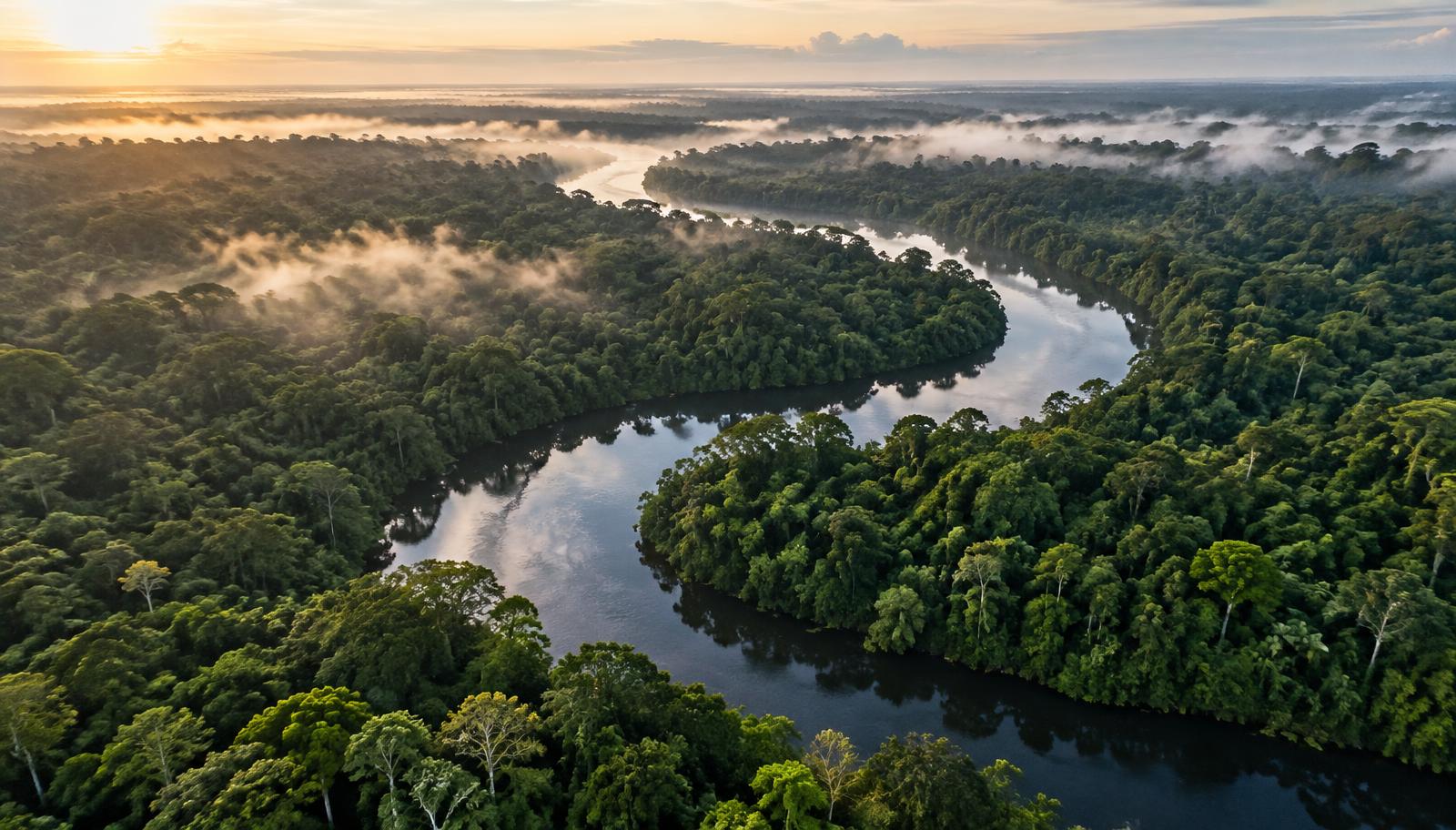
Climate protection projects avoid greenhouse gases, capture CO₂ or protect existing carbon stores such as forests. You can support them in two ways: with a donation to a non-profit organisation, or through CO₂ offsetting, which means buying certificates from certified projects.
Here you'll find the most important types of projects, the difference between a donation and offsetting, and the projects we support at TeamClimate.
Which Types of Climate Projects Exist?
Most climate projects focus on energy, nature or everyday life in households. The Bavarian State Office for the Environment distinguishes these main groups, with technical carbon removal as a separate approach.
| Project type | How it works | Examples |
|---|---|---|
| Renewable energy | Clean electricity replaces fossil energy | Wind power, solar, hydropower |
| Energy efficiency | Less energy is needed for the same output | More efficient equipment, replacing polluting fuels |
| Forest protection | Existing forest is preserved and its carbon stays stored | Protecting rainforest from deforestation |
| Afforestation | New forests grow and capture CO₂ | Reforesting land |
| Peatlands and soils | Natural carbon stores are preserved or built up | Rewetting peatlands, building humus |
| Household projects | Families use less firewood or fossil fuels | Clean drinking water, efficient cookstoves |
| Industry, waste, transport | Emissions fall directly at the source | Waste treatment projects |
| Technical carbon removal | CO₂ is captured and stored | Carbon capture and storage (CCS) |
Many of these projects bring extra benefits for local people, such as jobs, better health or clean water.
Where Can I Donate to Climate Projects?
For a donation in the legal sense, turn to non-profit environmental and climate organisations. If you want to link your contribution to your own emissions, CO₂ offsetting is the better fit. Many people search for both under the word “donate”, but they are two different things.
| Donation | CO₂ offsetting | |
|---|---|---|
| Legally | A voluntary gift to an organisation | At TeamClimate, a purchase of emission reduction certificates |
| What you fund | The organisation's work, e.g. projects, education or campaigns | Verified climate projects |
| Link to your footprint | None, you choose the amount freely | Your contribution is based on your emissions |
| Tax | Deductible if the organisation is eligible | Not a donation |
Donating: How to Find the Right Organisation
- Check for a donation seal: The Austrian Donation Seal of Approval lists organisations that are audited against fixed criteria.
- Check tax deductibility: The Austrian Ministry of Finance explains which organisations are eligible and when donations become deductible.
- Compare organisations: oesterreich.gv.at gives an overview of environmental organisations in Austria, including WWF, Greenpeace and Naturschutzbund.
- Donate directly: The German Environment Agency recommends donating directly to your chosen organisation rather than through portals.
A seal tells you how an organisation handles its money. It does not automatically prove the climate impact of individual projects.
Offsetting CO₂ in Three Steps
Offsetting CO₂ is always the last step: reduction comes first, then your climate contribution for what you can't avoid yet.
- Calculate your footprint. Our CO₂ calculator shows you where you stand in just a few minutes. Our guide to the carbon footprint helps you put the result into context.
- Reduce your emissions. Heating, mobility and food carry the most weight in most households. You'll find ideas in our 10 sustainable habits.
- Make a climate contribution. With CO₂ offsetting you fund certified climate projects, matched to your footprint or a fixed plan.
Your contribution doesn't undo your own emissions. It funds verified projects that avoid or capture emissions elsewhere.
The Climate Projects We Support
With TeamClimate you support projects for forest protection, drinking water and wind energy. Your contribution is split roughly evenly across these three areas. Since 2015, our community has offset more than 153,000 tonnes of CO₂ through climate projects this way.
Rainforest Protection in Peru
Our Amazon projects aim to protect rainforest from deforestation so that the stored carbon stays in the forest.
- Tambopata: The project protects 591,119 hectares in Madre de Dios, including through rangers and sustainable cocoa farming. Certified under VCS and CCBA Gold, implemented by the Peruvian NGO AIDER.
- Nii Kaniti: The project protects 119,837 hectares of community land belonging to seven Indigenous communities in Ucayali. Certified under VCS and CCBA, implemented by AIDER.
- Cordillera Azul: The project is located in the national park of the same name, jointly managed by SERNANP and CIMA. Certified under VCS and CCBA.
Clean Drinking Water in Bangladesh
In Sarankhola, families disinfect rainwater and pond water with WADI devices using sunlight instead of boiling it over a fire. This saves firewood and avoids CO₂. Our partner on the ground is HELIOZ, and the University of Natural Resources and Life Sciences, Vienna (BOKU) provides scientific support.
Wind Energy in India
Three wind farms in Maharashtra generate electricity intended to replace coal power. The projects are certified by the United Nations (UNFCCC) and operated by companies such as SIIL and Sahyadri.
You'll find an overview of all projects on our CO₂ offsetting page. Choosing individual projects is currently not possible.
How to Recognise Good Climate Projects
A good project demonstrably achieves an impact that wouldn't exist without the funding. The voluntary market is still barely regulated, so it's worth taking a close look at these criteria:
- Additionality: The project wouldn't have happened without the revenue.
- Permanence: The emission savings or stored carbon last over the long term.
- Measurability: The impact is calculated and continuously monitored.
- Independent verification: Third parties check the project against a standard such as Gold Standard or VCS.
- No double counting: Each emission reduction is counted only once.
- No leakage: Emissions don't simply shift to another location.
- Transparency: Project reports and evidence are publicly available.
A certificate alone is no guarantee. Forest protection projects have been criticised because some of their savings were overestimated. For renewable energy, the ICVCM rejected existing methodologies for its quality label in 2024 because they don't test additionality strictly enough.
This debate also affects project types we support. That's why you'll find our project reports on the project pages, and our audit history is public.
Frequently Asked Questions
Is CO₂ offsetting a donation?
No. At TeamClimate, your contribution is legally a purchase of emission reduction certificates, not a donation. TeamClimate is also not a charity.
How much does it cost to offset CO₂?
At TeamClimate, a subscription starts at €9.21 per month for 8 tonnes of CO₂ per year. Alternatively, your contribution is based on your result from the CO₂ calculator.
Can I choose a project?
Not at the moment. Your contribution is spread across the whole project mix of forest, water and energy.
Does offsetting replace reducing?
No. Reducing emissions comes first. Your climate contribution complements your own actions, but it doesn't undo your emissions.
Your Next Step
Want to know how big your contribution should be? Calculate your carbon footprint and then decide how you'd like to support climate projects.